
Green Thinking Review
Edition 88
Smart for Whom?
Who Pays, Who Benefits, Who Maintains It?
Smart technology brings possibilities. Making them work requires people, resources and continuing care. This edition examines who pays, who benefits and who maintains the systems that shape everyday life in our buildings.
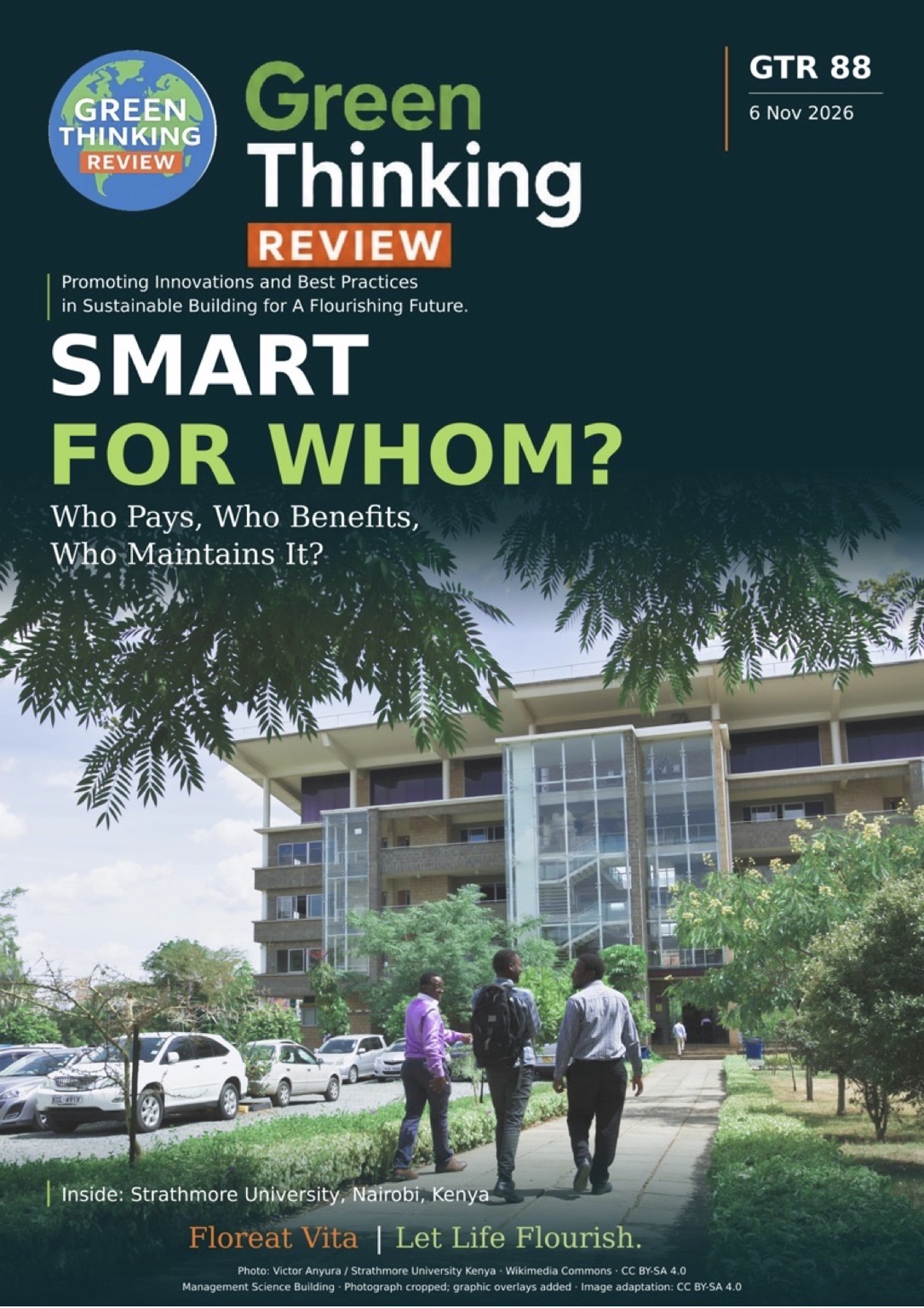 Edition cover · web-ready PDF available
Why this edition matters
A question with consequences.
The purchase price begins a longer commitment: electricity, connectivity, training, servicing and replacement. A useful alert needs someone equipped to respond; automation needs clear controls and workable fallbacks. Drawing on Strathmore University in Nairobi and lessons from Council House 2 in Melbourne, this edition asks how local skills, dependable support and informed ownership can sustain a system’s usefulness beyond handover.
Inside GTR 88
A complete conversation, in one focused edition.
Smart Is a Responsibility
Seven Ways to Make Smart Systems Serve People
Five Questions Before We Specify a Smart System
Strathmore University: What Happens After Installation?
Can We Keep It Working Here?
The Human Test
Choosing, Paying For and Maintaining Well
2040: When Smart Systems Serve
The Real Test Begins After Handover
Cover story
The Promise and the Everyday Reality
Make smart serve.
Ideas become useful when they meet a real place, a real challenge and the people shaping what comes next.
GTR reflection · Shareable thought
“A smart system earns its place when people can use it, maintain it and count on it.”— Green Thinking Review, Edition 88
How to cite
Reference this edition.
Green Thinking Review. “Smart for Whom? Who Pays, Who Benefits, Who Maintains It?” GTR 88, 6 November 2026. https://www.greenthinking.sheltagroup.com/issues/smart-for-whom
Permanent edition linkPublished by Green Thinking Review.
Subscribe free for the next edition